Get the free version of our exclusive Organic Growth Mastery Ebook.
How we made ₹42 Cr in D2C revenue Without Spending a Rupee on Ads.
Written by : Ritesh D.Ritelin
Over the past 12 months, our D2C brands generated ₹42 Crore+ in revenue, without relying on ads. If you're a D2C founder in 2026, here's your daily reality.
Meta ad costs rising every quarter.
Repeat customers dropping (or worse, never coming back).
Creatives fatiguing faster than you can test them.
And yet, when revenue dips, the only solution anyone offers is: Spend more. Scale faster. Raise a round.
What if I told you the real path to growth isn’t spending more on ads, it’s spending less. Take 3 minutes here to go through my life story (9 years of D2C learnings & 120 Cr. + Ad spends) before you waste another rupee on Meta.
What if you could increase your revenue by 20%, 50%, even 200%, without increasing your ad budget by a single rupee? There are some fundamental prinicipals of D2C growth that every successful, seasoned D2C founder knows.
We use these exact principles to grow brands such as Gully Labs, Atovio, The Cinnamon Kitchen, NUUK, NOOE, Justhuman, & several dozen more, including my own D2C brand. It took me almost a year to do it, but i have been able to decompress, simplify, and pen down these essential levers of organic growth into a 100 page guide, exclusively made for D2C founders & leaders.
Hey, I’m Ritesh. I started my career in D2C 9 years ago as a Facebook ads specialist, and back then, I genuinely loved ads. I was leading growth for a unicorn, spending crores every month, scaling funnels and chasing performance, until I quit my job to build my own D2C brand. That decision changed everything.
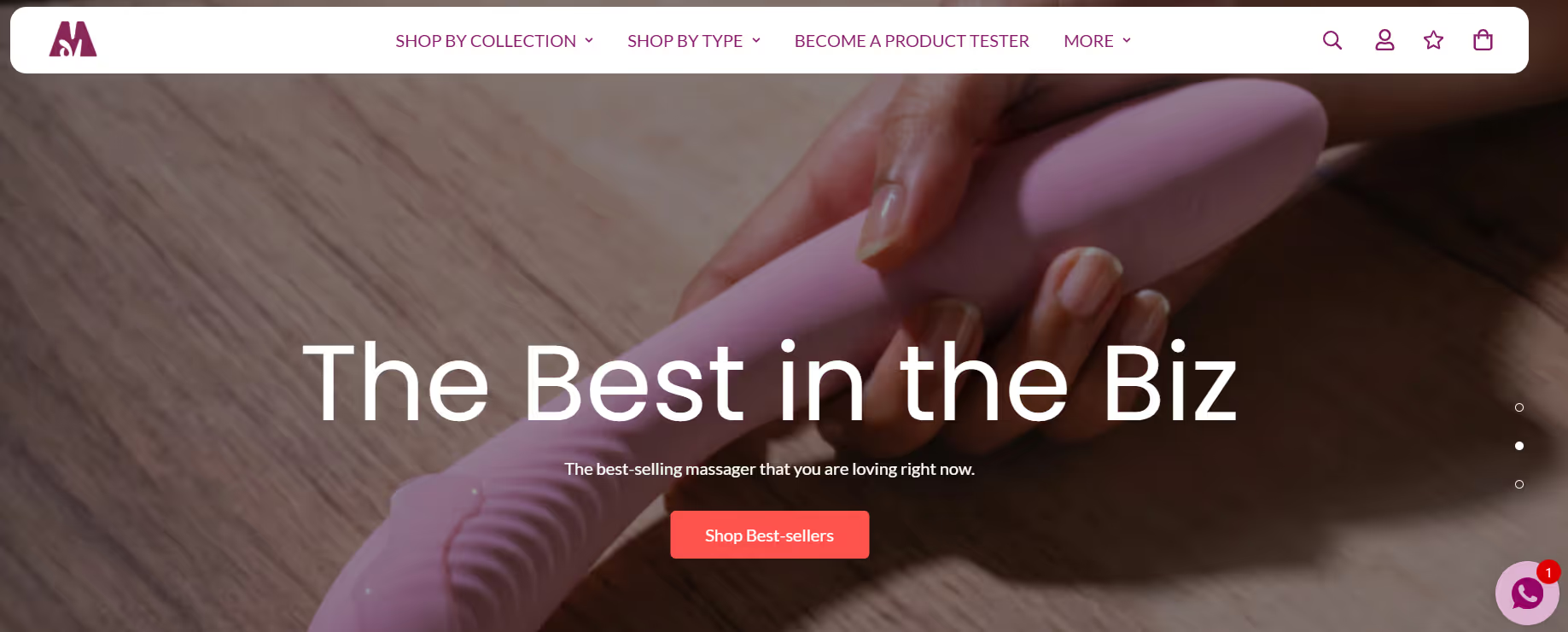
Manzuri—built to break taboos, not algorithms
Manzuri—built to break taboos, not algorithms
The Journey That Forced Me to Unlearn Everything
In 2020, I launched Manzuri, a design-first, semi-luxury sexual wellness brand with a simple goal: to normalize intimacy in India, not through shock value, but through empathy, education, and aesthetics.
We started on marketplaces, later moved to our own D2C store with just 3 SKUs, and stayed 100% bootstrapped :
2020: ₹45L revenue
2022: ₹1.2Cr revenue
2024: ₹10Cr+ lifetime revenue (with ZERO spends on paid marketing)
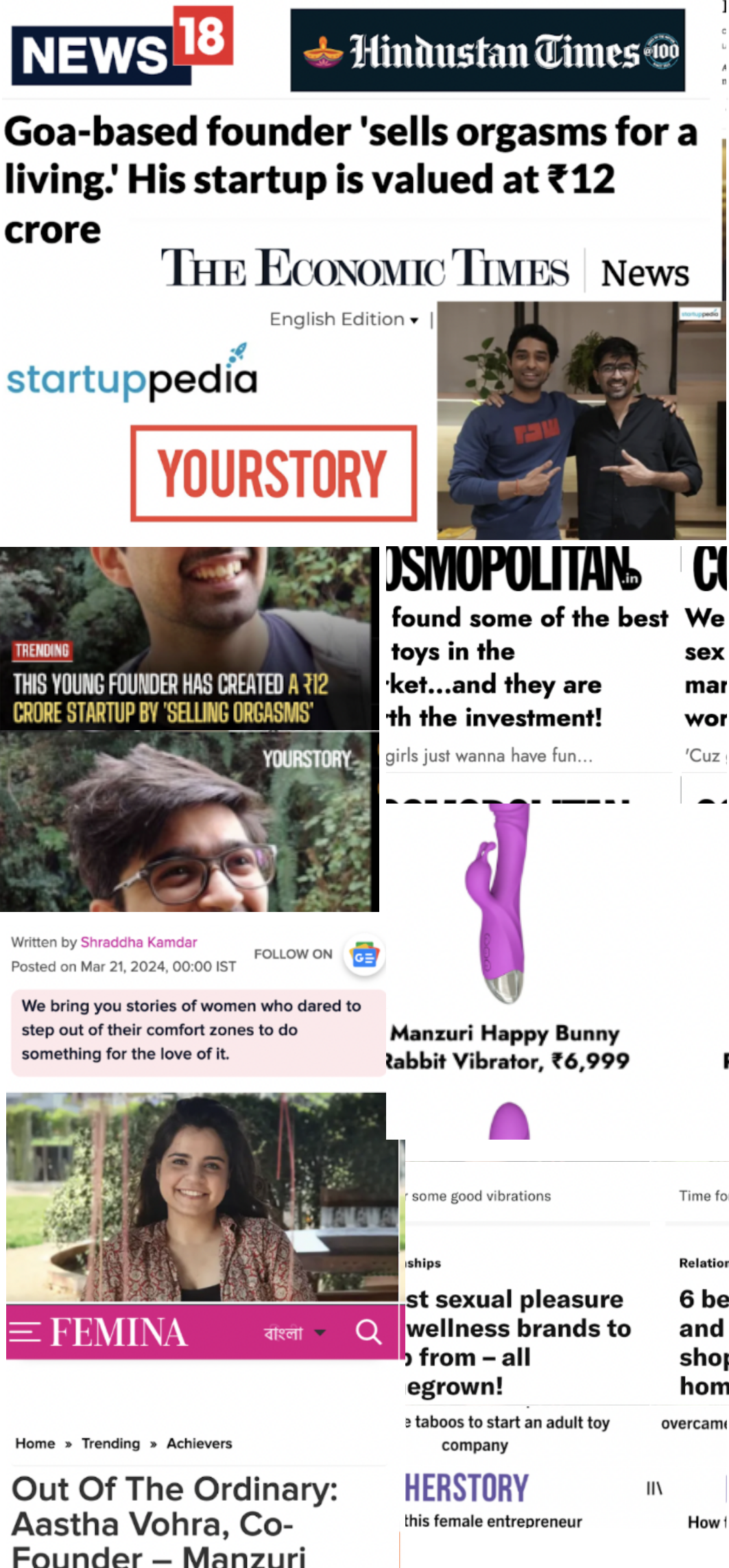
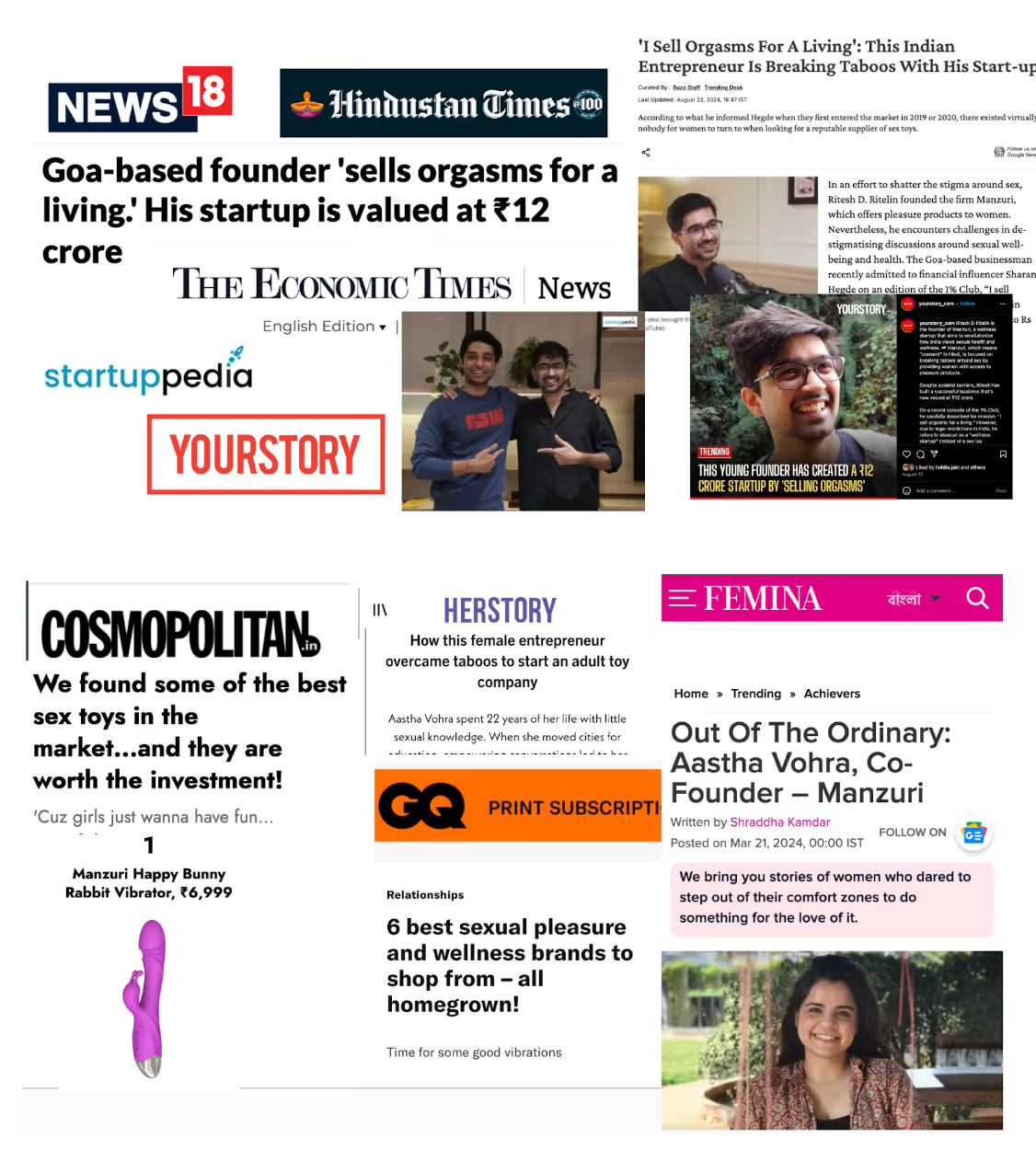
And yes, we even got a little famous along the way not for hype, but for challenging norms.
And here's the kicker. I had spent my entire career masteringpaid marketing, yet when I finally built my own brand, I couldn’t use it. Not by choice, by circumstance.
I tried to run ads in the early days, and everything failed:
Our category was flagged constantly.
Meta didn’t allow our products.
Even Google was hit-or-miss with approvals.
We were forced to go organic. And thank God we did.
P.S:You are now reading the first 10 pages of our Organic Growth Marketing guide. If you're serious about reducing your dependency on paid marketing, you should check out the full version below.
P.S: You are now reading the first 10 pages of our Organic Growth Marketing guide. If you're serious about reducing your dependency on paid marketing, you should check out the full version below.
The birth of a new movement
Then about 3 years ago, I started Porcellia, a marketing company with a very specific goal. Not to help D2C brands spend more on ads, but to help founders build businesses that don’t depend purely on ads. The idea was simple, growth shouldn’t depend on one lever, especially one you don’t control.
That usually raises an obvious question.
Do we use Meta ads to amplify our existing success ?
Of course we do, but very differently. We use Meta ads to amplify momentum, not to manufacture it. Across brands like Gully Labs, The Cinnamon Kitchen, Ajmal Perfumes, NOOE, and NUUK, we manage over ₹30 Cr in ad spend every year. The difference is this: none of these businesses are built on ads. Ads are an accelerator, not the engine.
And that distinction changes everything.
Most founders are told that Meta is the only way to grow. But the truth seasoned operators understand and rarely say out loud is this: Meta needs you more than you need Meta. Platforms survive on brands that haven’t built leverage elsewhere. Brands that do? They get to choose.
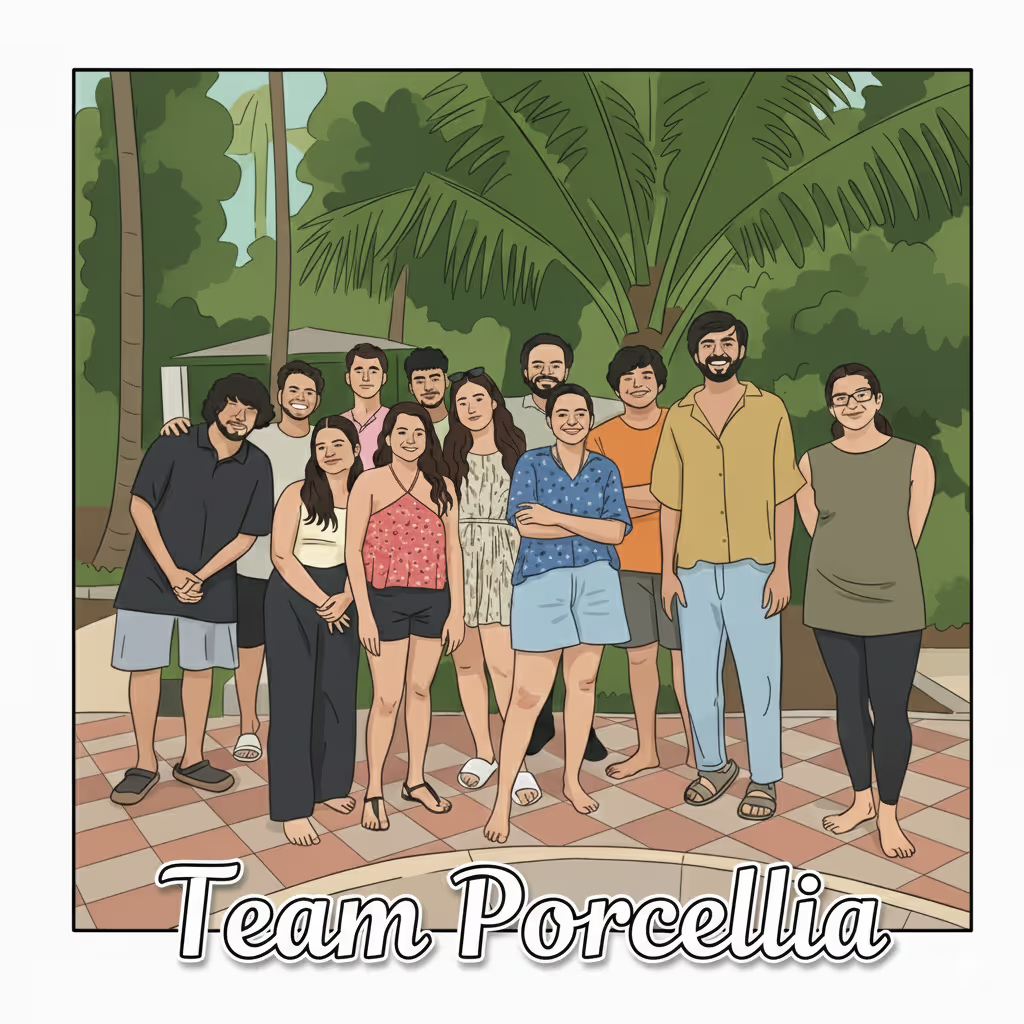
We're now 53 members strong, and 100% remote
Today, Porcellia is, fully remote team. And what we work on daily isn’t campaign optimization in isolation. We focus on the underlying systems that actually compound growth -> positioning that makes a brand hard to compare, storytelling that earns attention, PR that builds credibility, retention journeys across email and WhatsApp, conversion rate optimization that improves efficiency, and community building on platforms like Reddit where real conversations happen. And finally, performance channels for unlocking disproportionate scale.
When these levers work together, something interesting happens. For most of our clients, 40%–50 % of revenue comes from non-paid channels. Not because ads are bad, but because they’re no longer doing all the heavy lifting.
The brands that win aren’t the ones spending the most on ads. They’re the ones that build systems so strong that ads become optional, not essential.
Let me show you what that looks like in practice.
Results That Will Make You Question Everything
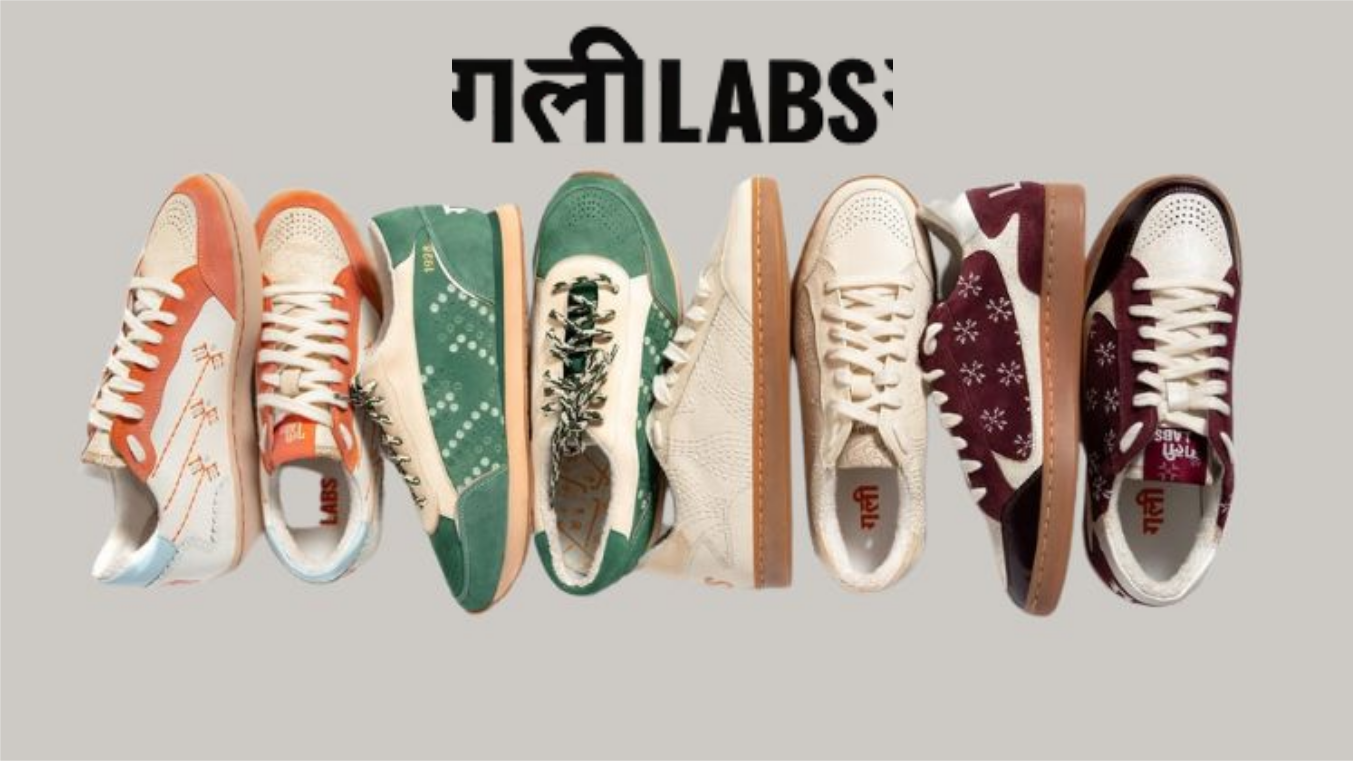
Take Gully Labs, a sneaker brand. In under 60 days, their monthly revenue tripled. This didn’t come from scaling spend. We improved their website conversion rate by over 20% in the first month, built retention marketing from scratch that pushed repeat purchases from 18% to 23%, expanded their presence on key marketplaces, and unlocked international demand through sharper positioning. Today, roughly 40 %of their revenue comes from organic, non-paid channels.
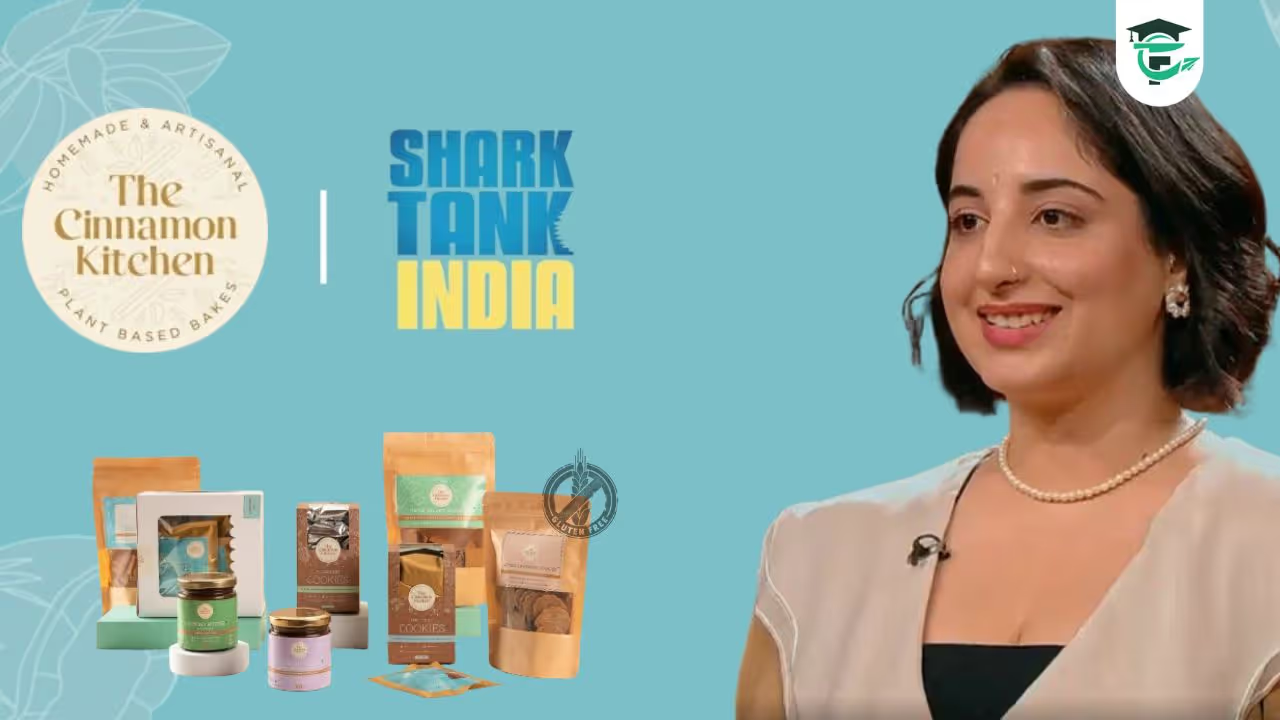
Then there’s The Cinnamon Kitchen. Within 3 years of launching, they scaled to nine-figure annual revenue. The inflection point came when we helped reposition the brand as India’s first PCOS-friendly bakery. That clarity allowed them to raise prices to nearly 30% above competitors, without hurting demand. Today, 45% of their revenue comes from organic and retention-led channels.
These aren't outliers. They're proof of a system. A system I stumbled into by accident and then spent years perfecting with every client we work with. Using the exact same process, the last 6 D2C brands we launched have all reached 40-50Lacs in monthly revenue with mouthwatering CM3 profitability numbers, in less than 6 months of launching.
A snapshot of the kind of ad budgets we manage to do at Porcellia.
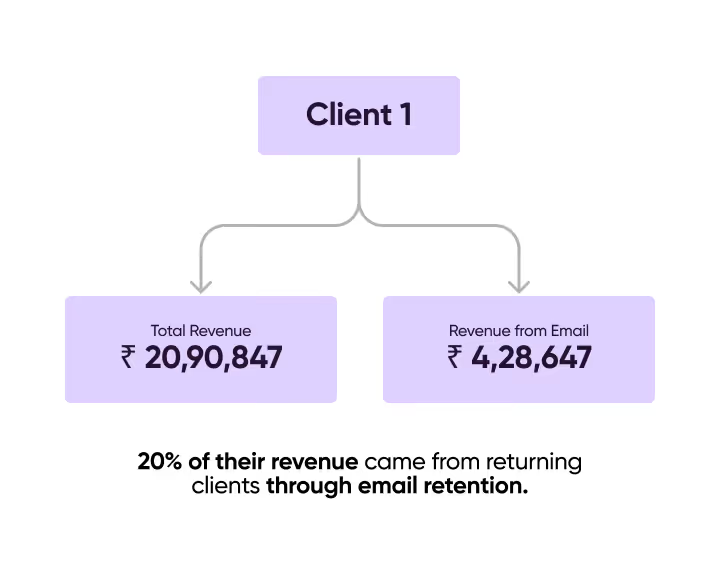
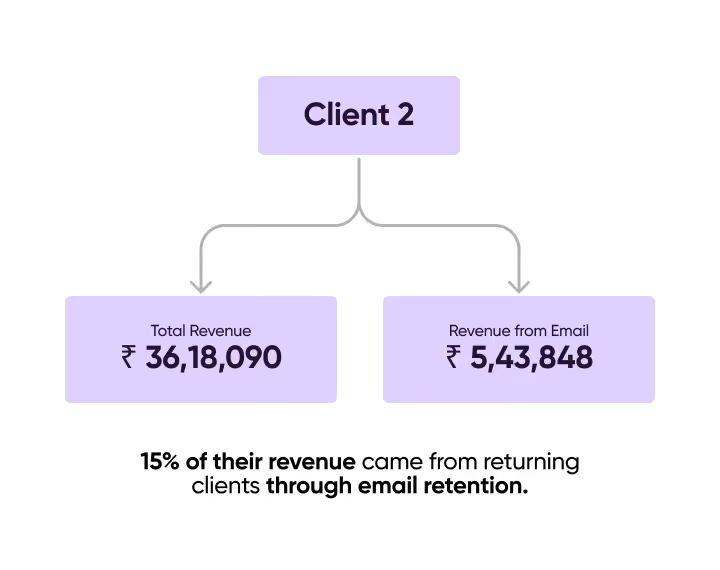
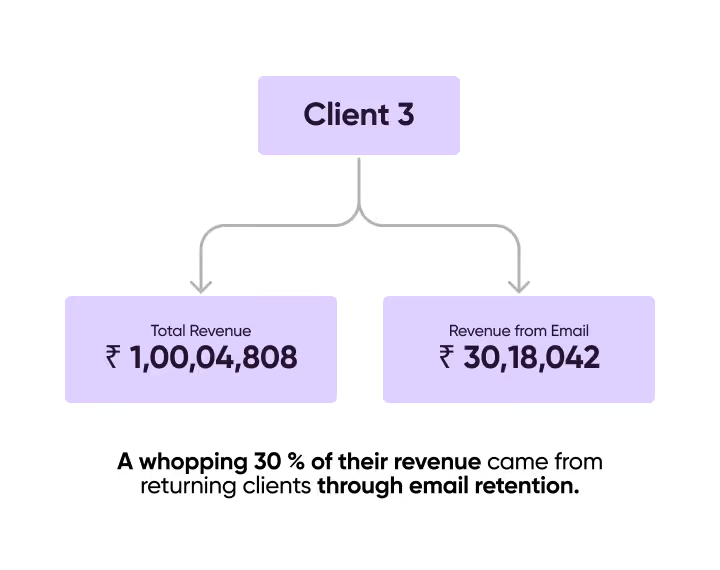
Here's more examples of retention-led growth for clients at Porcellia.
A snapshot of the kind of ad budgets we manage to do at Porcellia.
Ironically, we now manage crores in ad spend for our clients at Porcellia. But for Manzuri? We went a different route.
Not by choice. By necessity.
When the Ads Don't Work, the Brand Has to
What started as a constraint quickly became our biggest strength. When ads stopped working, the brand had to do the heavy lifting. And that forced us to build things most brands postpone indefinitely. Here's what we did instead:
Instead of: Launching ads to get traffic.
We did: Build converstaions on Reddit and niche communities.
Instead of: Paying influencers.
We did: Earned organic PR and turned it into a growth engine.
Instead of: Spamming discounts to increase conversions.
We did: Built immersive onboarding journeys on email & WhatsApp that made customers feel understood.
Over time, those choices stacked up. We launched Manzuri Labs, a loyalty program for early testers that gave us deep consumer insight, early feedback, and content that actually mattered. That same foundation is what eventually helped us pitch on Shark Tank Season 2, not as a brand chasing hype, but as one that understood its users deeply.
The Results ?
It worked. Here's what happened:
Over ₹3.5Cr in revenue from Reddit & Quora.
70+ PR placements without a single paid collab.
70% prepaid order rate in a low-trust category.
Pricing that let us maintain margins and scale.
And that's when I realised. Most founders are stuck scaling campaigns, not companies.
They're optimizing CTRs when they should be building positioning.
They're chasing ROAS when they should be chasing retention.
They're burning cash when they should be building moats.
So, What Actually Works?
Everything you’ve read so far is what we did. What comes next is how we did it.
This is the framework that powered Manzuri's ₹10Cr run, 3X'd a lifestyle brand's MRR in 90 days, allowed us to launch and scale 5+ brands from 0-40L MRR in less than 120 days, and helped several of our clients build 9 figure brands with organic-first systems.
Unlock the next chapter of Organic growth Mastery.
This isn’t a blog post, it’s the exact systems that founders use to scale without burning money on ads. Get instant access by email.
Keep reading ,this section is unlocked only via email access.
Step 1 of 3 · Tell us where you are
Where is your brand right now?
We work very differently with founders at different stages. Pick the one that fits — we'll take you to the right place.
The work looks different at each stage. Pick the one that's honest.
Pre PMF · 0 → 1
You're still figuring out what works.
That's exactly where we start.
Does this sound like you?
Zero-to-one looks different for different founders. But it almost always falls into one of these two places.
a) You've launched. You're spending. But nothing feels certain yet.
This is where most of our zero-to-one founders are. You have a website. You're doing ₹1–10L/month. You're running Meta or Google at ₹1–2L/month. Revenue is coming in, but you can't explain exactly why people buy, and you're not confident that turning off ads wouldn't stop the business.
Ask yourself
Do you understand why your customers are buying — beyond discounts or ads?
Are you using creatives to generate insights about your customers, or just to chase ROAS?
If you turned off paid tomorrow, would anything still move?
If you 5xed your budget overnight, would you feel more excitement or dread?
b) You haven't launched yet — but you're serious.
A smaller group of founders come to us before they've spent a rupee on acquisition. If this is you, the bar is higher. We need to see full-time intent, your business creating genuine value, and a willingness to invest in strategy before execution.
Ask yourself
Are you willing to invest in strategy before pouring money into execution?
Are you building something with a fresh point of view and are ahead of time for your category?
If either of these feels accurate, keep reading.
"Porcellia helps brands grow without increasing ad spend."
That's true. But it's also the most misunderstood part of what we do.
If you're here, you probably expect us to:
Reduce your ad spend
Improve your creatives
Bring in organic traffic
Fix performance marketing
We do all of that. But if that's why you're here, you're missing the point. Because none of those is your real problem.
The problem we're solving — before it exists
Most brands doing ₹15–20L/month are unprofitable. Not because their ads are bad. Not because their retention is broken. Not because their CRO needs fixing.
Because they never understood — clearly, precisely — who they are, who they're for, and why that person should pay full price to buy from them.
So they discount to acquire.
They spend to retain.
They optimise creatives to compensate for a positioning problem that creatives can never solve.
The revenue per user stays low.
The business stays fragile.
Scaling makes it worse.
That problem gets built in at zero-to-one. It compounds silently until the money runs out.
Our job, right now, is to make sure that never happens to you.
We do that through an insane amount of work on brand strategy, brand identity, and brand positioning — and then we accelerate and distribute it using every performance and growth lever available. Meta, Google, email, SEO, CRO. All of it. Built on a foundation that knows exactly what it's saying and why someone should believe it.
You will never have a revenue per user problem if you never have an identity problem.
That's what we're here to fix. Before it needs fixing.
What the work actually looks like
First, we build the foundation. Then we scale it. Aggressively.
Here's what sits at the core:
How your brand is positioned
How your product is perceived
How your pricing works
How your story is told
How your website converts
Why customers buy — and how fast, and how often
Why they don't come back
This is not performance marketing in isolation. Not CRO in isolation. Not creative strategy in isolation.
But we do all of it. You will have a performance marketing team running Meta and Google. A data analyst. A conversion rate specialist. Creatives being made and tested every week.
The difference is that every single one of them is operating from the layer of brand and identity. Not despite it. Because of it.
At zero-to-one, brand is the primary lever. Everything else plugs into it.
Why we're careful here
We take very few zero-to-one brands. This is deliberate.
We look for three things before we say yes:
Founder fit. At this stage, the brand is the founder. We need to understand how you think and why you're the person to build this.
Category fit. We specialise in new category creation — spaces where the positioning question isn't "how do we differentiate" but "how do we define." We combine the traditional growth playbook with a brand growth playbook built specifically for your business.
Creative ownership. The foundational work — positioning, narrative, brand identity — is either built entirely by us, or it's already at an unusually high standard. We don't patch other people's foundations.
What we won't do
We won't run ads into an unvalidated product. We won't make weak positioning look strong with good design. If the product or the thinking isn't there yet, we'll tell you — and tell you what needs to happen first.
Post PMF · 1 → 10
There's a high probability we're not the right fit for each other.
So before you proceed, read this note from our founder, Ritesh.
A note from Ritesh
Dear founder,
Either this is exactly what your business needs, or it isn't.
Either way, we save each other time.
— Ritesh, Founder
Most of the brands we've been able to meaningfully help fall into one of four situations. You'll likely recognise yourself in one of these.
1
You were growing well — and then growth slowed down.
Revenue is stable, sometimes even strong. But you've hit a ceiling. Scaling further feels harder than it should.
Ask yourself
Are you solving something people deeply care about — or just competing for the same demand as everyone else?
If you increased your prices by 10–20%, would your customers still choose you?
2
You're spending consistently on ads, but the business doesn't feel healthy.
Traffic is coming in. Revenue looks fine. But profitability is inconsistent, and scaling feels fragile.
Ask yourself
As you scale, is your dependence on paid marketing reducing or increasing?
Are your AOV and repeat purchase rates strong enough to make acquisition and retention work together — not against each other?
3
You're in the early stages, still figuring out what works.
You're doing ₹2–10L/month. Trying different things. Seeing some traction. But nothing feels predictable yet.
Ask yourself
Do you understand why your customers are buying — beyond discounts or ads?
Are you using creatives to generate insights about your customers — or just to chase ROAS?
4
You're pre-revenue — and want to get this right from day one.
You haven't scaled yet, but you don't want to build something fragile.
Ask yourself
Are you building this full-time with serious intent — or treating it as a side project?
Are you willing to invest in strategy before pouring money into execution?
If even one of these feels like a strong "yes", keep reading.
At this point, you already have a sense of where things are breaking. And you may have heard this about us:
"That they help brands grow without increasing ad spend."
That's true. But it's also one of the most misunderstood parts of what we do.
If you're here, you probably expect us to:
Reduce your ad spend
Improve your creatives
Bring in organic traffic
Fix performance marketing
We do all of that. But if that's why you're here, you're missing the point. Because none of those is your real problem.
You don't have a traffic problem.
You don't have a creative problem.
You don't have a channel problem.
You have a revenue per user problem.
Let's simplify this.
100,000 people enter your ecosystem in a year.
You make ₹5 per user → ₹5,00,000.
Same 100,000 people.
Now you make ₹10 per user → ₹10,00,000.
Same number of users. Completely different business.
Most founders try to scale before they deserve to scale.
They push more traffic into a system that isn't built to convert, retain, or monetise properly — and then blame Meta, creatives, or their agency.
We don't force growth. We remove the reasons it isn't happening.
Because if growth feels hard (despite good ops), something fundamental is broken.
What we do sits at the core of your business
How your brand is positioned
How your product is perceived
How your pricing works
How your story is told
How your website converts
How your customers think
Why they buy
How fast they buy
How frequently they buy
Why they don't come back
This is not performance marketing.
This is not CRO.
This is not creative strategy.
This is what decides whether you scale — or don't.
And the order matters.
First, we increase your revenue per user. Then — and only then — we scale. Aggressively.
Because scaling a broken system only makes you lose money faster.
This is not for everyone
If you're getting a few thousand visitors a month, this won't work.
If you're looking for cheap execution, this won't work.
If you want someone to "handle ads", "do SEO", or "improve creatives", this won't work.
If you're looking for quick wins, this won't work.
Here's the simplest way to think about it: if you have 15,000 people coming to your website every month, even a small increase in revenue per user pays for this work. And this is not a one-time gain. It compounds across every user, every month, for years.
But this only works because of how deep we go.
We speak to your customers.
We study behaviour.
We break down your category.
We analyse positioning.
We rebuild your narrative.
This is not execution. This is changing the inputs that drive your growth.
So if you're looking for:
Better ads
More traffic
Opening new channels for growth
Faster growth
Retention, performance marketing, CRO
We do all of this. But none of it works without fixing/building what sits underneath. And that's what Porcellia's true value prop is.
If this isn't for you
If you're merely looking for execution on platforms like Meta, Google, Reddit, or SEO, this likely won't be the right direction.
I understand — proceed to view available slots ↓
Book a call with a 0→1 specialist. Check your email for a confirmation & next steps immediately after.



.avif)
.avif)
%20(1).avif)

